The Science of Nature in Human Health
Have you noticed how walking through a forest or gazing at a landscape can instantly quiet the mind? This isn’t mere sentiment
It’s biology. We are made from the same elements as the Earth.
We are literally nature itself: from the cells that form our organs to the connective tissues that bind them together.
An Evolutionary Legacy
Our ancestors on the African savanna learned to read the environment for safety. Open, threat-free landscapes activated the parasympathetic nervous system — the body’s “rest and digest” state — slowing the heart, easing digestion, and promoting repair. That ancient wiring persists in us today. Cultures across the world recognized this long before science confirmed it. The Japanese formalized it as shinrin-yoku (forest bathing). Indigenous communities encoded it in ritual and story. Now, hundreds of studies back what they always knew. That same programming remains within us today.
A Healing Multisensory Experience
Nature engages every sense in ways that restore us at a cellular level:
Smell: Forest aromas or phytochemicals come from volatile organic compounds that enter our respiratory system and are absorbed by the body. Research shows that walking through forests of conifers, eucalyptus, or cypress increases the levels of compounds such as alpha-pinene and limonene in the blood. These molecules boost the activity of NK (natural killer) cells, strengthen the immune system, lower adrenaline, and promote psychological relaxation1.
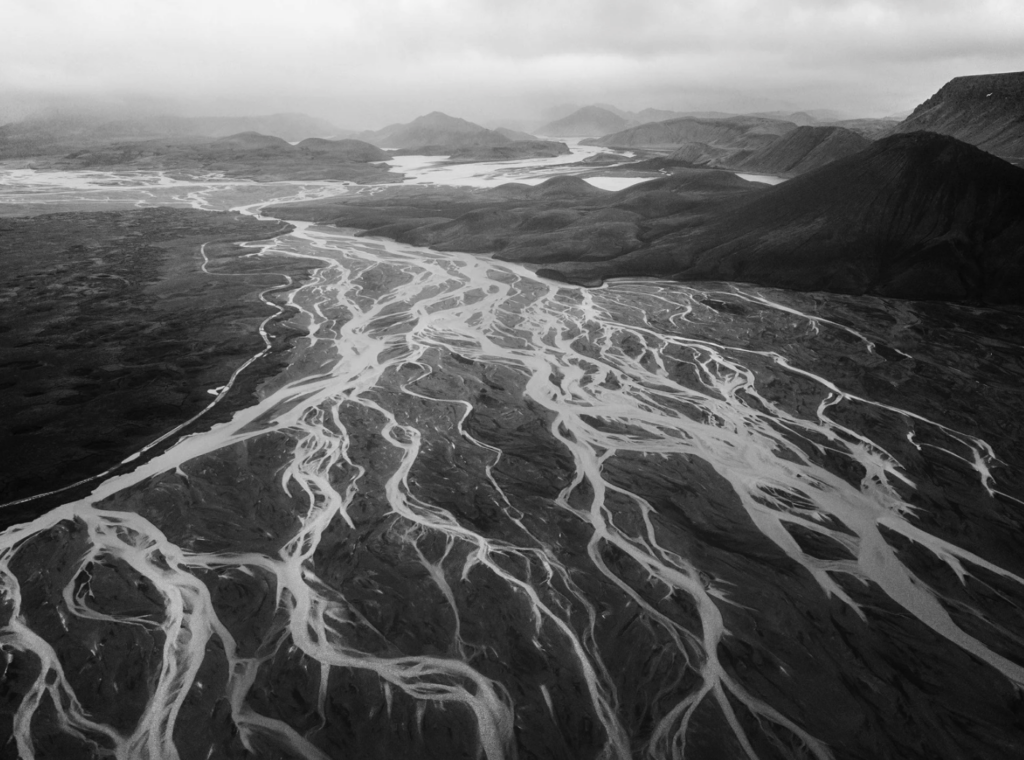
Sight: When we look at nature, our eyes often fall upon fractals—those repeating patterns woven into leaves, tree branches, coastlines, or mountain ridges. These natural designs are not just visually pleasing; they resonate with our biology. Research shows that fractals gently engage the parasympathetic nervous system which lowers stress levels and promotes relaxation. In fact, studies by Richard Taylor and colleagues reveal that simply observing fractal patterns can reduce stress markers by as much as 60%, leaving us with a deep sense of calm and peace2. It seems that in the very geometry of nature lies an ancient language that our nervous system instinctively understands.
Hearing: Birdsong carries more than melody—it carries meaning for our nervous system. Across evolution, humans learned to interpret the sound of singing birds as a signal of safety: if birds are chirping, predators are not nearby. This auditory cue reassures the brain that the environment is secure, letting the body rest. Modern research supports this ancient instinct. Studies show that exposure to natural soundscapes, especially birdsong, can lower stress, reduce anxiety, and enhance restorative processes in the brain 3. In this way, the voices of birds act as nature’s subtle reminder that we are safe, allowing body and mind to let go of vigilance and move toward calm.
Microbiome and Direct Exposure
Simple constant contact with healthy soil enriches the biodiversity of our microbiome—on both the skin and in the gut—strengthening our defenses. Moderate sun exposure regulates the circadian rhythm, essential for coordinating organ function, digestion, sleep, and hormonal balance.
One of the most significant factors for our mental well-being is explained by the Attention Restoration Theory, developed by Rachel and Stephen Kaplan. Their research shows how nature helps restore attention, memory, and processing capacity.
In today’s undeniable era of overstimulation—filled with screens, notifications, emails, television, sedentary habits, and endless hours indoors—our cognitive resources become depleted. Yet when we step outside and immerse ourselves in the natural world, our mental load lightens. Backed by hundreds of experiments, this theory demonstrates that spending time in nature not only restores our attention but also enhances memory and cognitive performance.
This article is a condensed version of what I explore more fully in my upcoming book, Nature’s Code. In it, we unravel the science, stories, and adventures that reveal how and why nature profoundly shapes our health and allow us to live longer and healthier.
Author: Ilhui Hernandez
Refereces
1) Li, Q., Morimoto, K., Kobayashi, M., Inagaki, H., Katsumata, M., Hirata, Y., … & Miyazaki, Y. (2008). A forest bathing trip increases human natural killer activity and expression of anti-cancer proteins in female subjects. J Biol Regul Homeost Agents, 22(1), 45-55.
2) Taylor, R. P., Spehar, B., Van Donkelaar, P., & Hagerhall, C. M. (2011). Perceptual and physiological responses to Jackson Pollock’s fractals. Frontiers in human neuroscience, 5, 60.
3)Ratcliffe, E., Gatersleben, B., & Sowden, P. T. (2013). Bird sounds and their contributions to perceived attention restoration and stress recovery. Journal of Environmental Psychology, 36, 221-228.